
A Guide to Retirement Planning in Australia
Retiring in Australia: Planning for Life Beyond Work
Retirement planning in Australia often attracts international attention, and for good reason. Australia is widely regarded as having one of the strongest and most sustainable retirement systems in the world, built on compulsory superannuation, a targeted public pension, and an increasingly sophisticated policy framework.
Since the introduction of employer-funded superannuation in the early 1990s, the system has grown into one of the largest private pension systems globally, with total superannuation assets now exceeding AUD $4.3 trillion.
Despite this strength, retirement remains one of the most emotionally charged life transitions for many people. Even Australians who are generally confident with their finances often question whether they have saved enough, whether their money will last, and whether they are making the right choices as retirement draws closer.
Making sense of retirement planning involves understanding how the system works, how it continues to evolve, and how individuals can move from working life to retirement income with greater clarity, confidence, and purpose.
What Is Retirement Planning?
At its core, retirement planning is the process of preparing financially, practically, and emotionally for life after work.
It involves building and managing savings during working years, understanding how income will be generated in retirement, managing risks such as market volatility, inflation, and longevity, and aligning financial decisions with lifestyle goals and personal values.
Australia’s retirement framework provides strong foundations, but individual outcomes still depend heavily on how well people understand the system and engage with the choices available to them.
The Australian Retirement System
A Three Pillar Framework to Building Retirement Income
Retirement income in Australia is supported by three interconnected pillars.
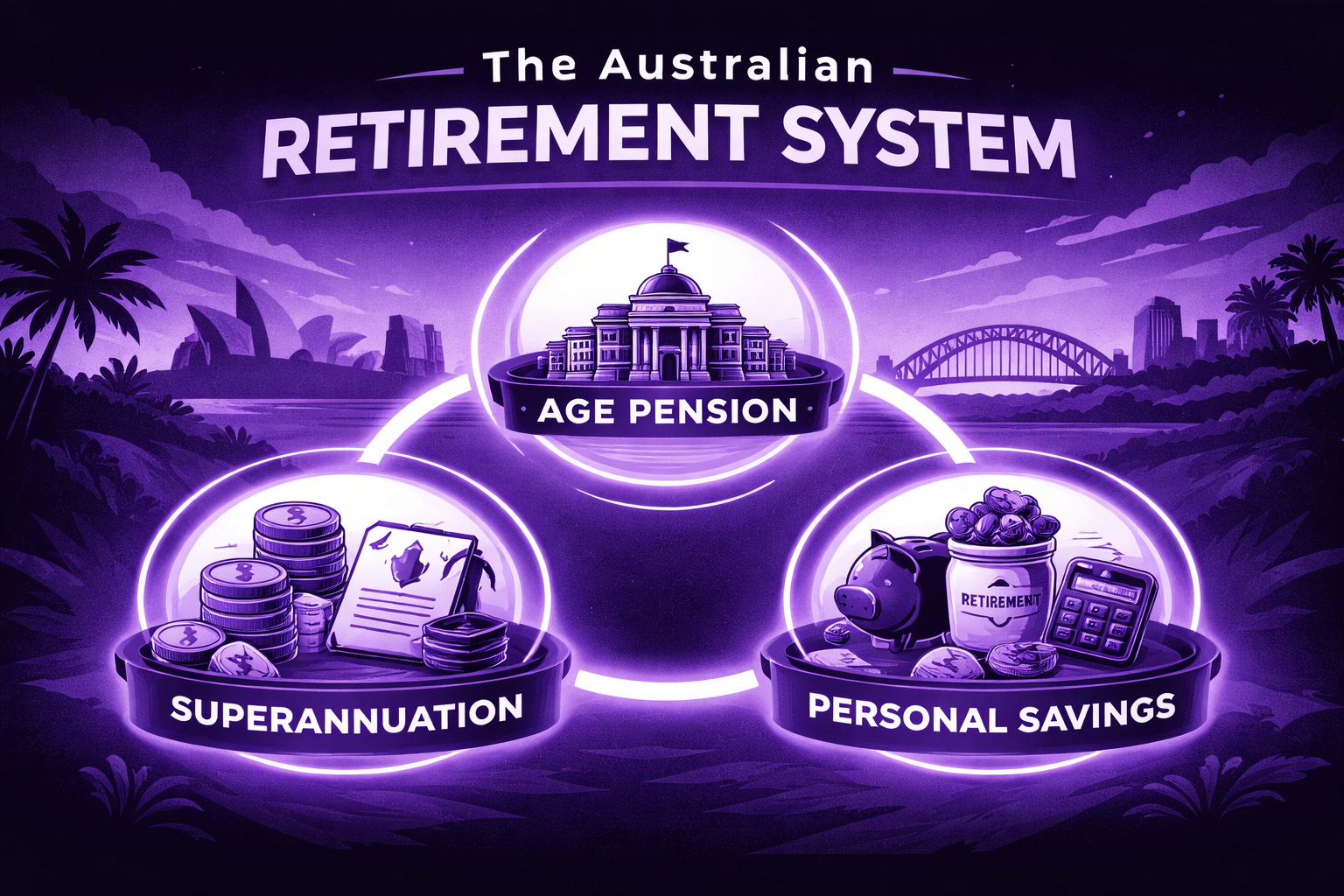
1) Superannuation sits at the heart of the system. Employers are required to contribute a percentage of wages - currently 12% - into a dedicated retirement savings account, which is privately managed and professionally invested. Contribution rules, access conditions, and tax settings are overseen by the Australian Taxation Office, supporting long-term retirement savings through tax concessions and a regulated framework.
2) The Age Pension provides a government-funded safety net for eligible retirees. It is means-tested and designed to ensure a basic standard of living rather than fully replace pre-retirement income. While modest by design, it plays an important role for many retirees, with eligibility and payment rates administered by Services Australia.
3) Many Australians also rely on personal or voluntary savings and assets, particularly the family home, which can reduce living costs in retirement and provide additional flexibility later in life.
Together, these pillars reflect a shared responsibility between individuals and government and have helped Australia manage the financial challenges of an ageing population.
How Superannuation Works in Practice
During working years, superannuation operates in the accumulation phase, where contributions are invested across a mix of assets such as shares, property, and fixed interest investments, with the aim of growing savings over time. Investment choice, fees, contribution levels, and time in the system all influence outcomes.
Access to super is generally restricted until a person reaches their preservation age, now typically 60, and meets a condition of release, such as retirement. This structure supports long-term discipline and helps ensure savings are available for their intended purpose - supporting income in retirement.
As retirement approaches, the focus naturally shifts from building balances to how those savings will be used to support spending over time.
Retirement Income Planning and Managing Risk
As people move closer to retirement, planning becomes less about saving and more about income.
What Retirement Income Planning Really Means
Retirement income planning focuses on how accumulated savings are converted into reliable, sustainable income once employment income stops. In Australia, this usually involves moving superannuation from the accumulation phase into the retirement phase, where funds are drawn down to meet living expenses.
Income may come from a combination of superannuation pensions, personal investments, lifetime income products such as annuities, lump sum withdrawals, and for some people, the Age Pension. Australia’s tax system supports this phase particularly well, with income from superannuation in the pension phase mostly tax-free, subject to legislated limits. Other investment income may also benefit from favourable tax treatment, depending on age and circumstances. This means how income is structured and drawn can be just as important as how savings were built.
The Key Risks Retirement Planning Needs to Address
While Australia’s retirement system provides a strong framework, managing risk remains a central part of retirement planning. Retirement savings may need to last several decades, making longevity risk a key consideration.
Market risk is particularly relevant in the early years of retirement, when withdrawals, combined with market downturns, can have a lasting impact on income.
Additionally, inflation can erode purchasing power over time, while health and aged care costs are often unpredictable and tend to rise later in life.
Managing these risks requires a shift in mindset from accumulation to sustainability and flexibility.
How Australia’s Retirement System Is Adapting
Recognising these challenges, Australia’s retirement framework has continued to evolve. Government reviews over the past decade highlighted longer lifespans, changing work patterns, and increasing pressure on public finances, reinforcing the need to focus not only on how much people save, but how effectively those savings are used in retirement.
This shift was formalised with the introduction of the Retirement Income Covenant in 2022.Under the covenant, superannuation funds are required to consider how they support members to balance sustainable income, risk management, and flexibility as they draw down their retirement savings, as outlined by the Australian Treasury. The emphasis has moved beyond growing balances toward supporting real retirement outcomes.
A Step-by-Step Framework for Retirement Planning
Retirement planning looks different for everyone, but most successful plans tend to follow a similar underlying process. For many people wondering how to approach retirement planning, breaking the process into clear steps can make it far more manageable.
Step 1: Clarify Your Lifestyle, Goals, and Transition from Work
Good retirement planning begins with lifestyle, not numbers.
For many Australians, retirement is a gradual transition rather than a single moment. It is worth considering how work might change over time, whether through reduced hours, a different role, or a full exit from the workforce. Reflecting on what matters most, such as flexibility, health, purpose, or freedom, helps anchor financial decisions.
These values can then be translated into clear goals. Some will be practical, such as travel, housing decisions, or healthcare needs. Others may be more personal, such as staying socially connected, supporting family, or contributing to the community.
Step 2: Understand Your Spending
A realistic understanding of spending is one of the most important foundations of retirement planning.
This involves understanding current expenses, how they may change in retirement, and planning for irregular costs such as travel, home maintenance, replacing vehicles, or helping family. Clear insight into spending helps turn lifestyle goals into realistic income needs.
Step 3: Review Debts and Financial Commitments
Debt can significantly affect flexibility in retirement, particularly if repayments continue after employment income stops.
Understanding what debts exist, how they are structured, and whether they should be reduced or cleared before retirement is an important part of planning. In some cases, restructuring debt to improve cash flow, manage risk, or achieve greater tax efficiency may be just as important as reducing the balance itself.
What matters is that debt is a conscious and well-considered decision, not something that drifts into retirement without a clear purpose or plan.
Step 4: Convert Lifestyle into Income Needs
This is often the point at which people start to ask how much they actually need to retire with confidence.
Rather than focusing on a single lump sum, this step involves estimating the level of income required to support your chosen lifestyle. Thinking in terms of income keeps planning grounded in real life.
At the same time, balances still matter. Drawing higher income from a lower balance may not be sustainable over time, particularly if markets fall or spending increases. The aim is to balance income today with preserving enough capital to support income over the long term.
Australian Retirement Calculators
Simple retirement calculators, such as those provided by ASIC’s MoneySmart, can be a useful starting point for estimating income needs, although they work best when combined with abroader understanding of spending, risk, and long-term sustainability.
Step 5: Review Superannuation and Investments
With income needs clearer, attention turns to how savings are invested.
This involves understanding where money is held, how it is invested, and whether the balance between growth and stability remains appropriate as retirement approaches. Adjustments made well before retirement can have a meaningful impact over time.
Step 6: Plan How Retirement Income Will Be Generated
Retirement income usually comes from multiple sources working together.
This may include superannuation pensions, personal investments, the Age Pension where eligible, and in some cases the family home. Downsizer contributions and structured home equity arrangements can help convert housing wealth into income, though these options require careful consideration.
For some retirees, lifetime income products such as annuities also form part of the picture. Annuities can provide a stable, predictable income stream by locking in a level of income, helping reduce exposure to market volatility, and in some situations improving Age Pension outcomes.
Used thoughtfully, these income sources can work together to balance certainty, flexibility, and sustainability over time.
Step 7: Build Buffers and Prepare for the Unexpected
No retirement plan unfolds exactly as expected.
Good planning includes buffers such as emergency funds, flexible spending strategies, and an understanding of how your plan would respond to changes in markets, health, or circumstances. The goal is not to eliminate risk, but to build resilience and reduce stress over time.
Approaching retirement planning in this structured way helps bring clarity to what can otherwise feel overwhelming. It also highlights why retirement planning is rarely about a single decision or product, but about how multiple pieces fit together.
Working through these steps often provides clarity and direction as retirement approaches. For others, it also highlights just how much there is to consider and why thoughtful guidance can be valuable, particularly as decisions around income, risk, and long-term sustainability become more complex.
Retirement: Life Beyond Work
Australia’s retirement system provides a strong foundation, but the outcomes people experience are shaped by how they engage with it and the choices they make over time.
At its heart, retirement planning is about creating the freedom to live well beyond work. With clarity around goals, income, and risk, retirement can feel less uncertain and more like a purposeful next stage of life.
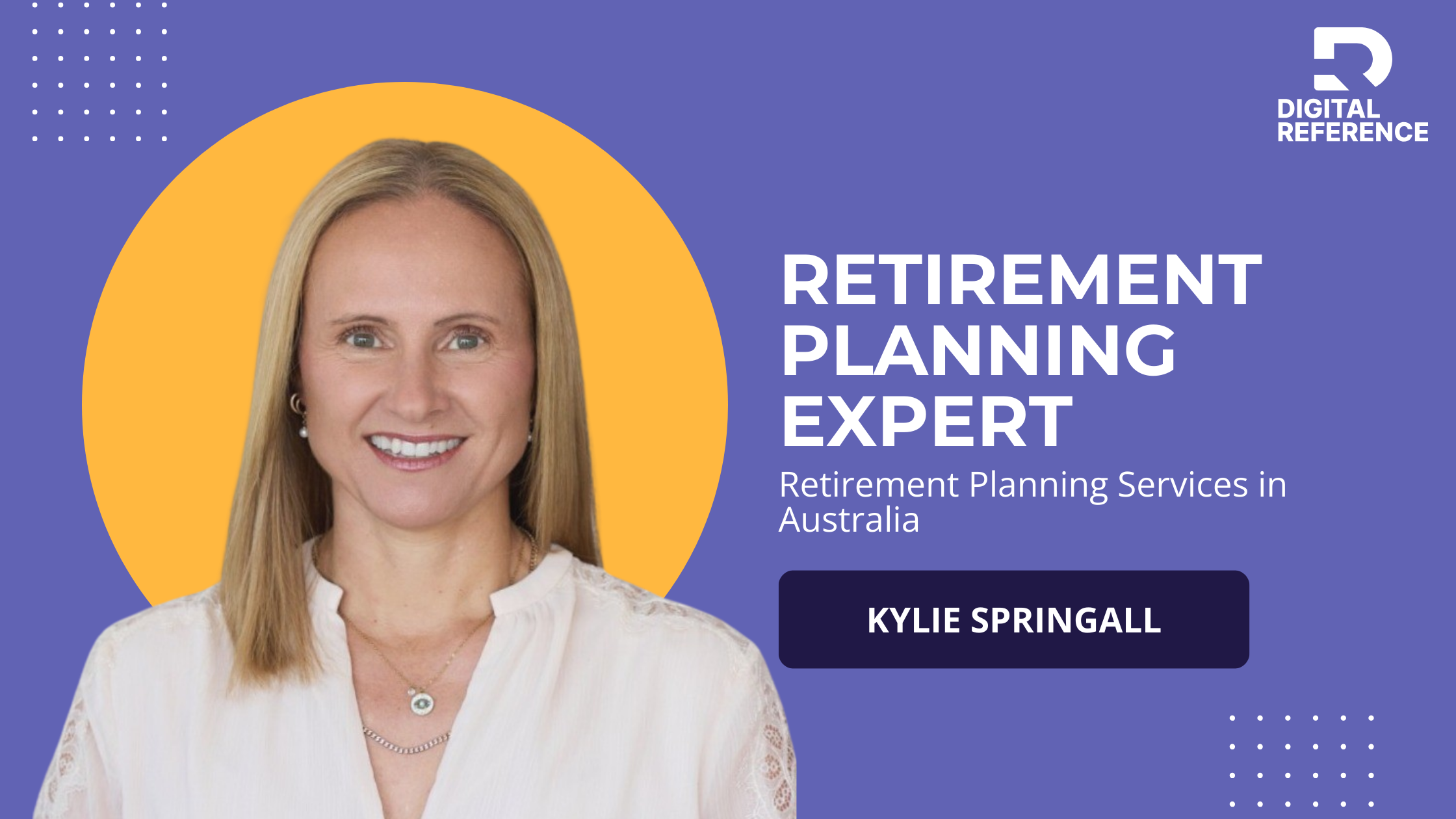
Meet our Retirement Planning Expert: Kylie Springall
Kylie Springall is a Financial Adviser and Retirement Specialist based in Australia, helping everyday Australians retire with clarity, confidence, and peace of mind. Kylie emphasizes a holistic approach—considering not just numbers, but clients’ goals, lifestyle, and wellbeing—to build strategies that support a fulfilling, secure retirement.
To Learn More About Kylie:
Check out her website: Retire Aware
Or checkout her feature as a Top Financial Planner in Sydney
Subscribe to our newsletter
We'd love to have you follow our journey, learn about to new features and functionality, and get access to talent ecosystem news.