What Is a Forward Deployed Engineer? Responsibilities, Skills, and How to Hire One


What Is a Forward Deployed Engineer? Responsibilities, Skills, and How to Hire One
Artificial intelligence, enterprise software, and increasingly complex technology stacks have created a new challenge for businesses: building powerful technology is one thing, but making it work inside a customer's organization is another.
That's where the forward deployed engineer (FDE) comes in.
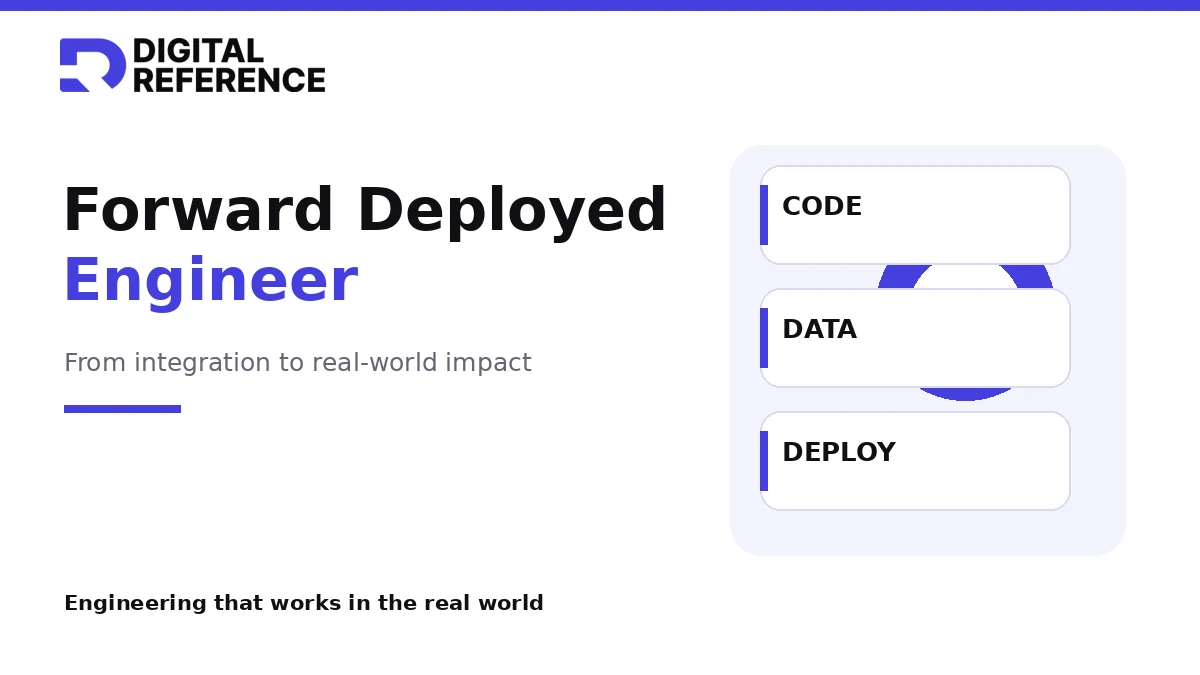
Forward deployed engineers combine software engineering expertise with customer-facing problem-solving. Rather than spending all their time developing products behind the scenes, they work directly with customers to integrate technology, solve implementation challenges, and turn technical capabilities into measurable business outcomes.
As more organizations adopt AI tools and sophisticated enterprise software, forward deployed engineering is becoming an increasingly important capability.
At Digital Reference, we believe the professionals best positioned for these roles are those who can demonstrate what they've actually built, explain the challenges they've overcome, and provide credible references from people who have worked alongside them.
What Is a Forward Deployed Engineer?
A forward deployed engineer is a technical professional who works closely with customers to implement, customize, and optimize software solutions in real-world business environments.
Unlike traditional software engineers, who often concentrate on developing a company's core product, forward deployed engineers bridge the gap between product development and customer implementation.
Their work can include:
- Integrating software with customer systems and databases.
- Developing custom workflows and technical solutions.
- Deploying AI models and automation tools.
- Troubleshooting implementation challenges.
- Collaborating with customer stakeholders and engineering teams.
- Translating customer requirements into technical specifications.
- Identifying product improvements based on real-world usage.
The role is particularly relevant in enterprise software, artificial intelligence, cloud infrastructure, and data-intensive industries.
What Does a Forward Deployed Engineer Do?
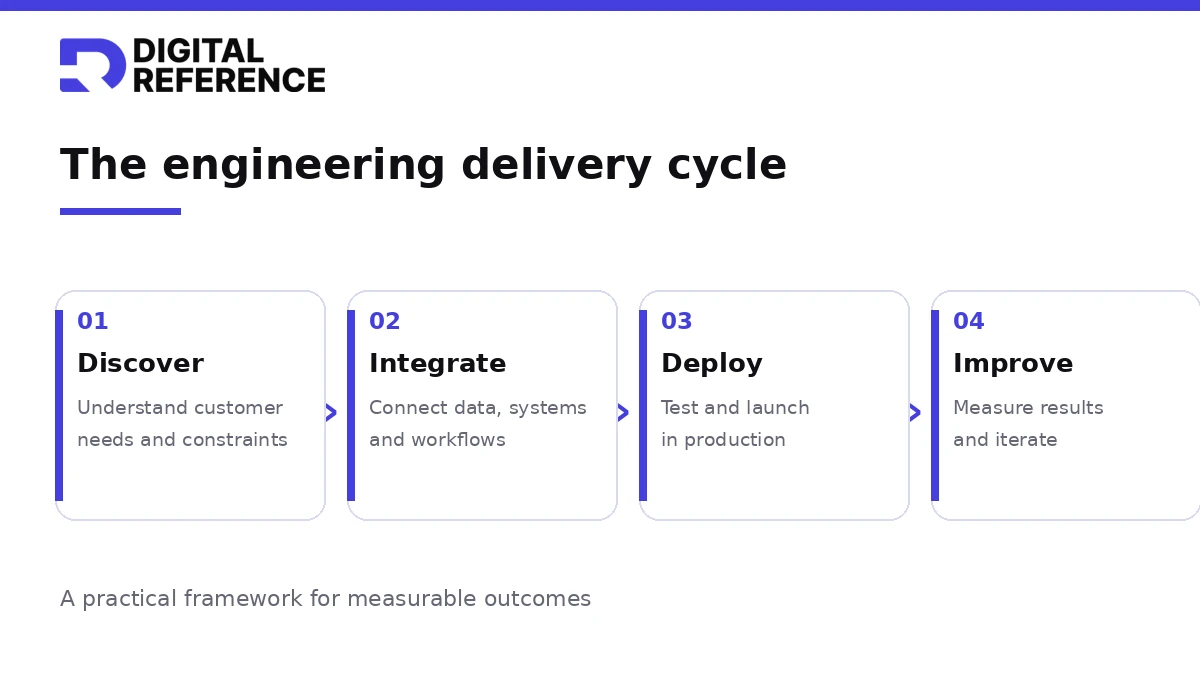
The specific responsibilities vary by company, but most forward deployed engineers focus on four major areas.
1. Understanding Customer Requirements
Before implementing technology, an FDE must understand the customer's business objectives, technical infrastructure, and operational constraints.
This involves working with engineering teams, business leaders, and end users to identify problems and define what success should look like.
2. Building and Integrating Solutions
Forward deployed engineers frequently write production-quality code, configure APIs, integrate data systems, and develop customized applications.
For example, an AI software company might employ an FDE to integrate its language-model capabilities into a customer's existing support platform.
The engineer must understand both the underlying technology and the operational environment in which it will be deployed.
3. Deploying and Troubleshooting Technology
Successful implementations require more than writing code.
Forward deployed engineers help manage deployment, diagnose integration problems, monitor performance, and address unexpected technical challenges.
They may also work closely with security teams to ensure deployments meet organizational requirements.
4. Improving Products Through Customer Feedback
Because forward deployed engineers work directly with customers, they often uncover product limitations that internal development teams might otherwise miss.
Their feedback can influence product roadmaps, usability improvements, and new technical capabilities.
This makes the role valuable not only for customer success but also for product development.
Forward Deployed Engineer vs. Software Engineer
Although both roles require strong technical capabilities, they typically differ in how they work and where they create value.
Neither role is inherently more technical or more senior. The distinction is primarily about the nature of the work.
What Skills Does a Forward Deployed Engineer Need?
Successful FDEs combine deep technical knowledge with communication and business problem-solving abilities.
Technical Skills
Important technical competencies often include:
- Python, JavaScript, Java, or other relevant programming languages.
- API development and integration.
- Cloud platforms such as AWS, Azure, and Google Cloud.
- Database architecture and SQL.
- Data engineering and ETL pipelines.
- Containerization and deployment workflows.
- AI and machine learning integration.
- Security and access management.
The exact requirements depend on the employer's technology stack.
Communication and Collaboration
Forward deployed engineers must communicate technical concepts to audiences with varying levels of expertise.
They often collaborate with product managers, executives, customer success teams, and technical stakeholders.
The ability to translate complicated engineering challenges into understandable business decisions is essential.
Business Judgment
An effective FDE understands that the most technically sophisticated solution is not always the best business solution.
They must evaluate implementation complexity, cost, reliability, maintainability, and customer priorities.
When Should a Company Hire a Forward Deployed Engineer?
Hiring an FDE may make sense when a company is experiencing implementation bottlenecks or expanding into more complex customer environments.
Common indicators include:
- Enterprise customers require extensive technical customization.
- Customer onboarding takes too long.
- Product engineers are spending excessive time on individual customer implementations.
- AI applications need integration into existing business workflows.
- Technical issues are preventing customers from realizing the product's value.
- Customer feedback is not reaching product development teams effectively.
For businesses still defining their technology strategy, a fractional CTO may be a complementary option.
A CTO provides broader technical leadership, while an FDE concentrates on implementing solutions in customer environments.
Organizations exploring AI transformation may also benefit from understanding what an AI consultant does.
How to Evaluate a Forward Deployed Engineer
Technical interviews and coding assessments can reveal important skills, but they don't always demonstrate how someone performs in real customer environments.
A stronger evaluation process considers actual accomplishments.
Ask candidates to explain:
- A complex implementation they personally delivered.
- How they handled conflicting customer requirements.
- An unexpected deployment problem and how they resolved it.
- The measurable outcome of a technical project.
- How they collaborated with customer stakeholders.
Whenever possible, review examples of completed projects and speak with former customers or collaborators.
Professional references provide valuable context beyond a resume.
At Digital Reference, professionals can document their experience, highlight accomplishments, and request references from people with firsthand knowledge of their work.
Video references can offer additional insight into how an engineer communicates, collaborates, and responds to challenges.
This is especially useful for customer-facing technical positions where interpersonal skills matter alongside engineering expertise.
Can Forward Deployed Engineers Work Fractionally?
Yes. Some businesses engage forward deployed engineers as independent contractors, consultants, or fractional technical specialists.
A fractional arrangement can be appropriate when an organization needs specialized implementation expertise for a defined project or a limited number of customer accounts.
However, ongoing customer-facing technical work may require consistent availability, making a full-time role preferable in some circumstances.
Businesses should evaluate the expected workload, customer requirements, security obligations, and continuity needs before selecting an engagement model.
For a broader comparison, read Fractional Executives vs. Consultants: Choosing the Right Professional for Your Business.
Building Credibility as a Forward Deployed Engineer
Forward deployed engineers often contribute to projects involving confidential customer systems, proprietary software, and complex integrations.
That can make it difficult to showcase their work publicly.
A professional portfolio can still demonstrate credibility without revealing sensitive information.
Useful portfolio elements include:
- Descriptions of technical challenges and project scope.
- The engineer's specific responsibilities.
- Technologies and frameworks used.
- Quantifiable results where disclosure is permitted.
- References from customers or colleagues.
- Video explanations of project approaches and lessons learned.
A verified accomplishment is particularly compelling because it gives potential employers or clients greater confidence that the professional contributed to the outcome being described.
Frequently Asked Questions
Is a forward deployed engineer the same as a solutions engineer?
Not necessarily. Solutions engineers often focus on demonstrating, designing, or supporting technical solutions, including during the sales process. Forward deployed engineers typically spend more time implementing and customizing solutions directly within customer environments.
Do forward deployed engineers write code?
Yes. Many forward deployed engineers write substantial amounts of code, including integrations, data pipelines, application features, and automation workflows.
Are forward deployed engineers involved in AI?
Frequently. AI companies may rely on FDEs to integrate models, connect enterprise data sources, build workflows, and deploy AI applications in customer environments.
Is forward deployed engineering a good career?
It can be an attractive career for engineers who enjoy technical challenges, customer interaction, and seeing their work produce direct business results.
Final Thoughts: Technical Expertise Is More Valuable When It Can Be Demonstrated
Forward deployed engineers play an important role in turning complex technology into working business solutions.
As organizations invest in AI, automation, and enterprise software, the ability to bridge engineering and customer implementation will remain valuable.
For professionals pursuing these opportunities, technical skills are only part of the story.
Demonstrating real accomplishments, communicating clearly, and providing credible references can make a meaningful difference.
Digital Reference helps professionals build portfolios that showcase experience, accomplishments, and authentic perspectives from the people who know their work.
Explore Digital Reference and build your professional portfolio.
Subscribe to our newsletter
We'd love to have you follow our journey, learn about to new features and functionality, and get access to talent ecosystem news.