What Is a Fractional CRO? Responsibilities, Costs, Benefits, and When to Hire One


What Is a Fractional CRO? Responsibilities, Costs, Benefits, and When to Hire One
Revenue growth is one of the most important responsibilities within any business.
But as organizations scale, generating predictable revenue becomes increasingly complicated.
Sales teams need clear processes. Marketing must attract qualified opportunities. Customer success teams need to retain and expand relationships. Leadership must understand which activities are actually driving growth.
Coordinating these functions often requires experienced executive leadership.
For businesses that aren't ready to hire a full-time Chief Revenue Officer, a fractional CRO can provide a flexible alternative.
A fractional CRO brings senior-level revenue leadership to an organization on a part-time or contract basis, helping align teams, improve commercial performance, and develop sustainable growth strategies.
At Digital Reference, we believe evaluating these leaders requires more than reviewing impressive revenue claims. Their professional experience, accomplishments, and references should help tell the complete story of how they contributed to business growth.
What Is a Fractional CRO?
A fractional Chief Revenue Officer (CRO) is an experienced revenue executive who works with a business on a part-time, retainer, or interim basis.
Unlike a full-time CRO, who typically holds a permanent executive position, a fractional CRO provides leadership for an agreed portion of their time.
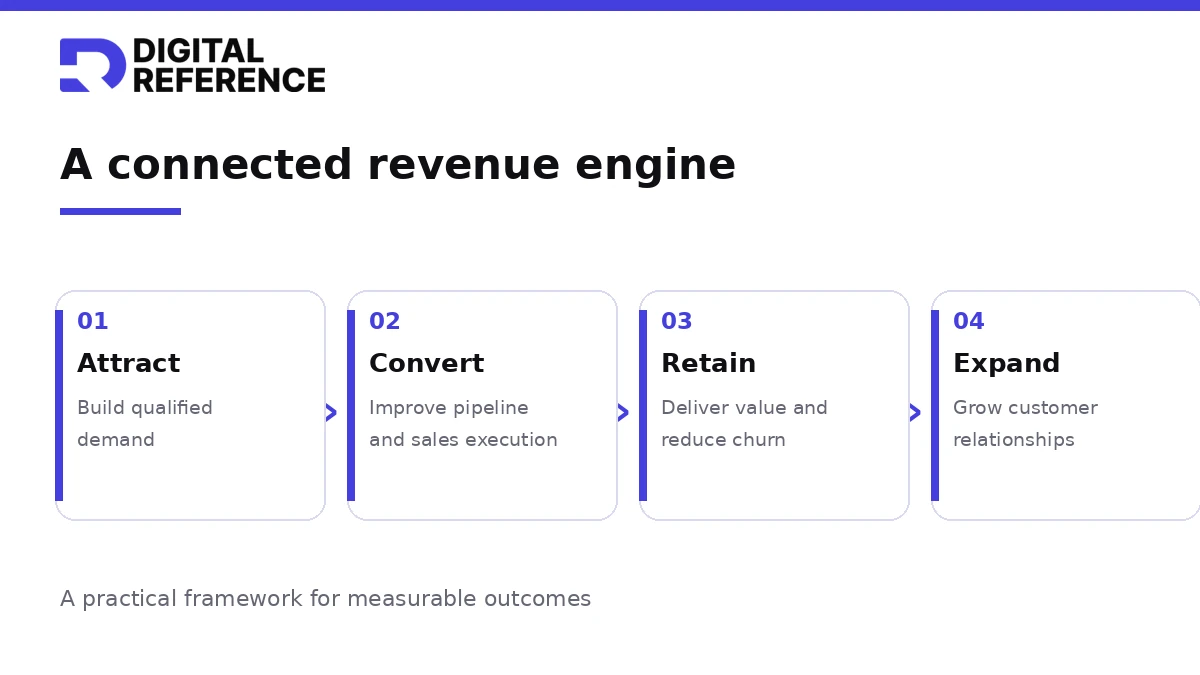
Their primary responsibility is to improve how the organization generates, retains, and expands revenue.
Depending on the company's structure, a fractional CRO may oversee:
- Sales strategy and leadership.
- Revenue operations.
- Go-to-market planning.
- Sales and marketing alignment.
- Customer acquisition.
- Customer retention and expansion.
- Revenue forecasting.
- Sales team development.
- Pricing and commercial strategy.
The goal is to establish a more coordinated and predictable approach to revenue growth.
What Does a Fractional CRO Do?
Fractional CRO responsibilities vary based on company size, industry, and growth stage.
However, several core activities are common.
1. Develop a Revenue Growth Strategy
A fractional CRO evaluates the company's existing revenue model and identifies opportunities for improvement.
This may involve reviewing customer segments, pricing, sales channels, conversion rates, and customer acquisition economics.
The CRO then develops a strategy that connects revenue objectives to specific operational priorities.
2. Align Sales and Marketing
Sales and marketing teams sometimes operate with different goals, metrics, and definitions of success.
A fractional CRO can help establish shared objectives and clearer accountability.
For example, marketing may focus on generating qualified opportunities while sales concentrates on converting those opportunities into customers.
Both functions should contribute to the same commercial outcomes.
Companies that need dedicated marketing leadership may also consider hiring a fractional CMO.
3. Improve Sales Processes
An experienced revenue leader can evaluate the effectiveness of existing sales processes.
Common improvements include:
- Refining lead qualification criteria.
- Standardizing sales stages.
- Improving CRM adoption.
- Establishing pipeline management practices.
- Developing repeatable sales playbooks.
- Strengthening sales forecasting.
- Improving handoffs between teams.
4. Build Revenue Operations
Revenue operations, often called RevOps, connects the systems, data, processes, and reporting used across commercial teams.
A fractional CRO may help define revenue metrics, improve reporting accuracy, and create consistent processes across departments.
5. Support Customer Retention and Expansion
Revenue growth doesn't end when a customer signs a contract.
Depending on the business model, a CRO may also focus on renewals, upselling, customer expansion, and reducing churn.
This is particularly important for subscription and recurring-revenue businesses.
Fractional CRO vs. Fractional CMO vs. VP of Sales
These positions overlap, but they have different areas of accountability.
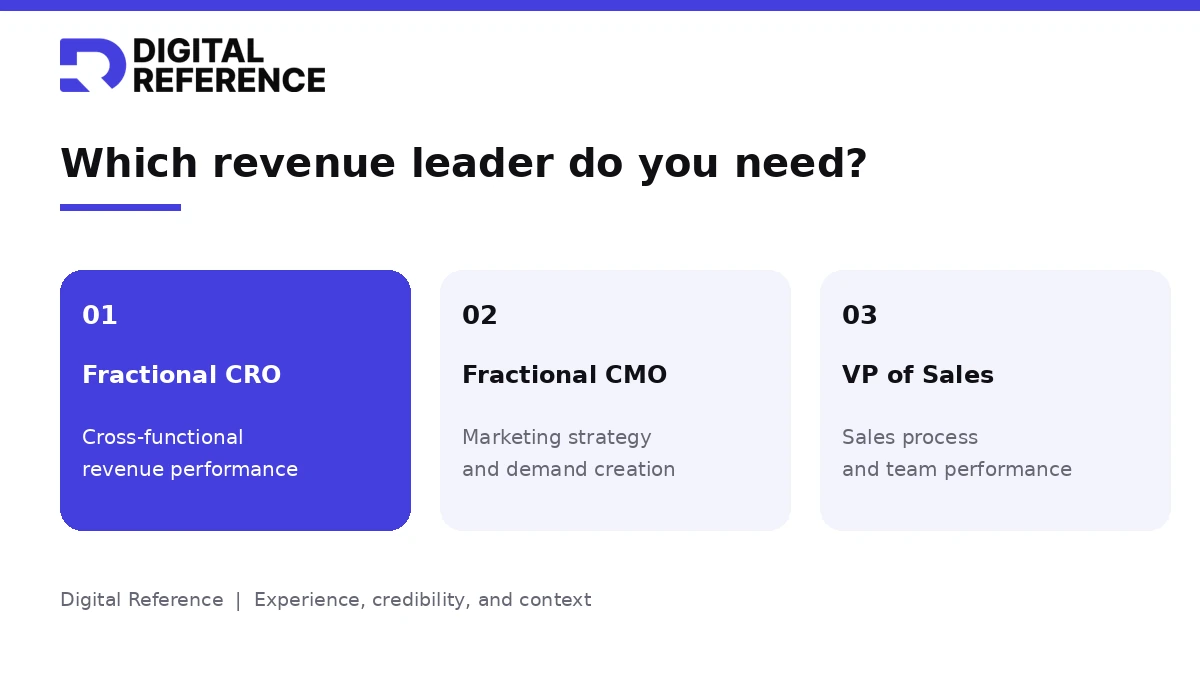
A fractional CRO generally operates across multiple revenue-generating functions.
A fractional CMO concentrates on marketing leadership, while a VP of Sales typically focuses on sales execution and team performance.
The right choice depends on the organization's biggest challenges.
If a company is struggling primarily with brand awareness and demand generation, marketing leadership may be the more immediate need.
If the challenge involves disconnected commercial teams and inconsistent revenue performance, a CRO may provide broader value.
What Are the Benefits of Hiring a Fractional CRO?
Experienced Revenue Leadership Without a Full-Time Commitment
A fractional CRO provides access to executive-level experience without requiring a permanent executive hire.
Improved Cross-Functional Alignment
Revenue performance depends on collaboration between marketing, sales, customer success, and operations.
A fractional CRO can help create shared goals and clearer responsibilities.
Better Revenue Visibility
Improved forecasting and reporting can help leadership understand performance, identify risks, and make better decisions.
Scalable Sales Processes
A CRO can establish repeatable processes that support growth as the organization adds customers and employees.
External Perspective
An experienced fractional executive may recognize inefficiencies or opportunities that internal teams have overlooked.
These benefits depend on the leader's capabilities, the organization's readiness for change, and the scope of the engagement.
When Should a Company Hire a Fractional CRO?
Several situations may indicate that a business needs experienced revenue leadership.
Revenue Growth Has Plateaued
The company has achieved early traction but struggles to maintain consistent growth.
Sales and Marketing Are Disconnected
Teams operate independently, resulting in poor handoffs, inconsistent messaging, or unclear accountability.
Forecasting Is Unreliable
Leadership cannot confidently predict future revenue or understand why performance varies.
The Sales Organization Is Scaling
A business may need stronger sales management, reporting, hiring practices, and processes before expanding its team.
Customer Retention Needs Improvement
Revenue may be growing through acquisition while existing customers leave at an unsustainable rate.
The Company Is Preparing for a New Growth Stage
Organizations entering new markets, introducing products, or preparing for investment may need more sophisticated commercial leadership.
For businesses considering flexible executive arrangements, explore What Is a Fractional Executive? The Complete Guide.
How Much Does a Fractional CRO Cost?
Fractional CRO pricing depends on experience, company size, scope, and expected time commitment.
Common engagement models include:
- Monthly retainer: A recurring fee for ongoing revenue leadership.
- Hourly or daily consulting: Payment for defined periods of executive support.
- Project-based engagement: A fixed fee for a specific revenue transformation initiative.
- Interim executive arrangement: Temporary leadership during a transition or hiring process.
Some agreements may also include performance-based compensation.
Businesses should carefully define how performance incentives are measured, including which outcomes the CRO can reasonably influence.
A fractional CRO should be evaluated based on expected value and scope rather than price alone.
How to Hire the Right Fractional CRO
Hiring a revenue executive requires careful evaluation because the role can influence multiple departments and important business decisions.
Evaluate Relevant Industry Experience
A CRO who has successfully scaled enterprise software sales may have a different skill set from someone who specializes in consumer products or professional services.
Look for experience aligned with your business model, sales cycle, and customer base.
Review Specific Revenue Accomplishments
Ask candidates to explain measurable outcomes from previous engagements.
Examples might include:
- Improving sales conversion rates.
- Increasing qualified pipeline.
- Reducing customer acquisition costs.
- Improving forecast accuracy.
- Increasing customer retention.
- Building or restructuring sales teams.
Importantly, ask what the professional personally contributed.
Revenue results are usually influenced by many factors, including product quality, market conditions, pricing, and the performance of other teams.
Assess Leadership and Communication
A successful CRO must influence teams across different functions.
Ask how candidates handle disagreements, establish accountability, and communicate priorities to company leadership.
Request Professional References
References can help validate a candidate's experience and provide insight into their leadership approach.
Former colleagues, executives, and clients may be able to explain how the CRO performed under pressure and whether their contributions were sustainable.
Why Verified Accomplishments Matter for Fractional CROs
Revenue leadership is a results-driven profession.
However, claims about generating millions in revenue or dramatically improving sales performance can be difficult to evaluate without context.
Was the executive responsible for the strategy? Did they manage the sales team? Were they directly involved in execution? What market conditions influenced the outcome?
These distinctions matter.
At Digital Reference, we believe professional credibility should be built around transparent experience and authentic perspectives.
Professionals can document their accomplishments and invite people with firsthand knowledge of their work to serve as references.
Video references can add context by allowing former collaborators to describe what went well, how the professional contributed, and what it was like to work together.
For fractional CROs, this can provide a more complete picture of leadership effectiveness than a resume or revenue figure alone.
Building a Credible Personal Brand as a Fractional CRO
Independent revenue executives compete for opportunities based on their expertise, reputation, and ability to inspire confidence.
A strong professional portfolio should communicate:
- Industries and business models served.
- Revenue leadership specialties.
- Specific commercial challenges addressed.
- Measurable accomplishments.
- Leadership responsibilities.
- Relevant client and colleague references.
- Authentic video testimonials.
Rather than relying exclusively on broad statements about growth, professionals should explain how they achieved results and what responsibilities they held.
A portfolio supported by firsthand references can help prospective clients evaluate both capabilities and working style.
Explore the Digital Reference fractional executive directory to see how independent professionals present their experience.
Frequently Asked Questions
What is the difference between a fractional CRO and a full-time CRO?
A fractional CRO provides revenue leadership on a part-time or contract basis, while a full-time CRO holds an ongoing executive position within the organization.
Is a fractional CRO responsible for sales?
Usually, sales leadership is a major part of the role. However, fractional CROs may also oversee marketing alignment, revenue operations, customer retention, and other commercial functions.
Can a startup hire a fractional CRO?
Yes. Startups with an established product and early revenue traction may benefit from experienced commercial leadership before they are ready for a full-time executive.
How long does a fractional CRO engagement last?
Engagements vary. Some last for a defined transition or growth initiative, while others continue as ongoing part-time leadership arrangements.
What should a fractional CRO accomplish in the first 90 days?
Early priorities may include evaluating revenue performance, identifying bottlenecks, improving forecasting, clarifying responsibilities, and developing an actionable growth plan.
Final Thoughts: Revenue Leadership Requires More Than Impressive Numbers
A fractional CRO can help businesses build stronger commercial systems, improve collaboration, and develop more predictable revenue performance.
But selecting the right leader requires understanding the experience behind their accomplishments.
Companies should look for relevant expertise, measurable results, transparent communication, and credible references.
For fractional revenue executives, demonstrating those qualities can help establish trust before the first client conversation.
Digital Reference helps professionals turn their experience into a more complete, credible professional story.
Build your professional portfolio with Digital Reference and showcase the accomplishments, references, and perspectives that distinguish your work.
Subscribe to our newsletter
We'd love to have you follow our journey, learn about to new features and functionality, and get access to talent ecosystem news.


